Editorial team ·
What a game tutorial can tell you about a random draw
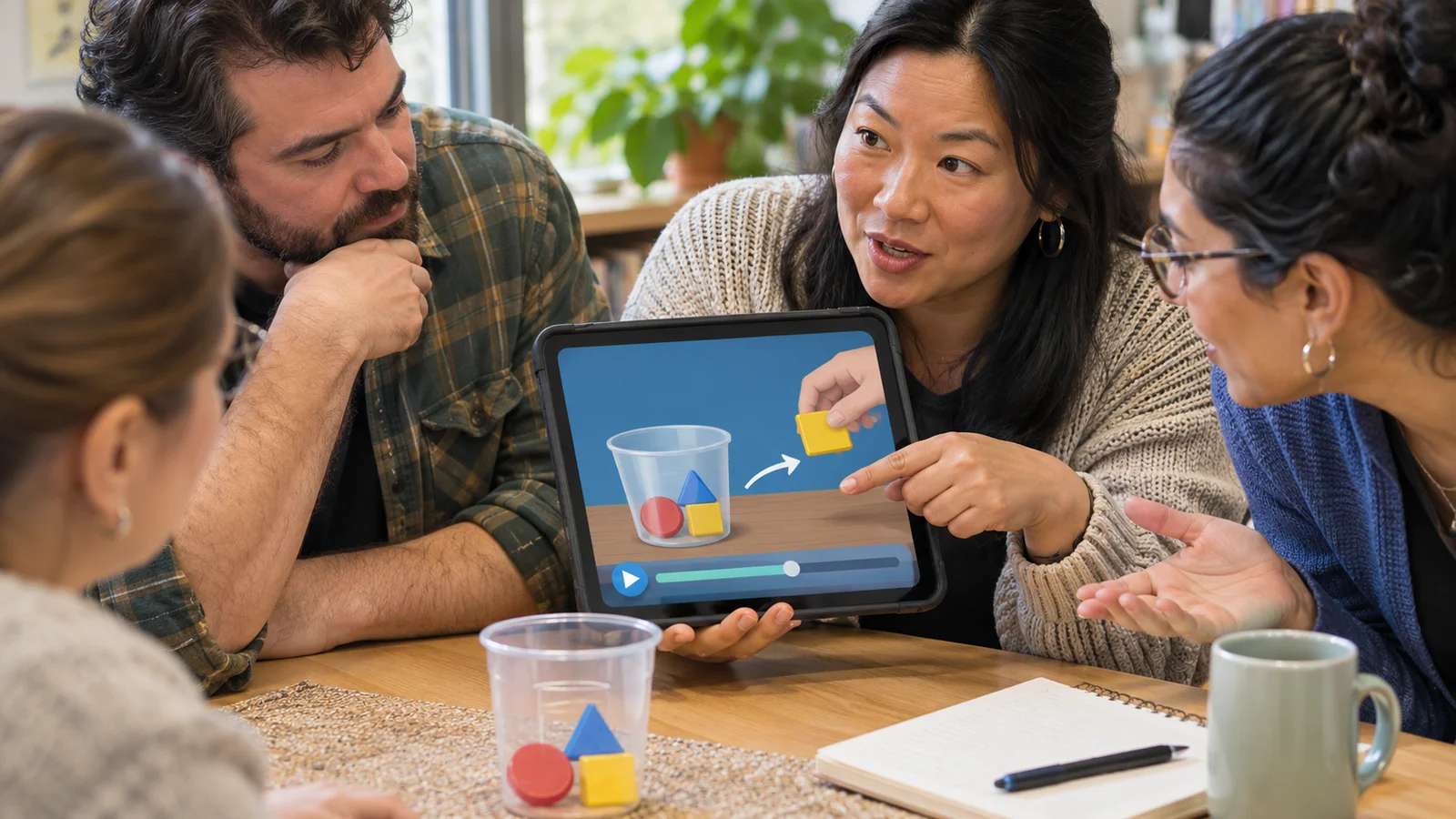
The tutorial shows a cup with three coloured shapes and hands you one. A player asks whether the shape goes back before the next round. The animation does not show that step. Take a moment to read the rule that goes with the picture before predicting what the next turn looks like.
Find the instruction beside the demonstration
In the practice tutorial, the written rule says to return each shape and mix before drawing again. The animation stops before showing the return. The text answers the question the short demonstration leaves open.
If a new round changes the contents of the cup, describe that separately. The colours on the first practice turn only show what was in the first set. Check whether later stages use the same rule.
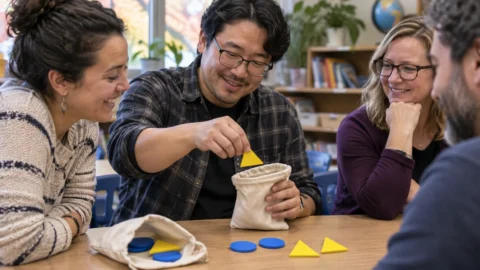
A preview may show one example outcome without a list of all outcomes. If the exercise asks students to reason about chance, provide the complete paper set yourself so they know what is available to draw.
Give participants one turn explaining the rule to a partner. Ask them to name when the draw happens and what goes back. That shows whether the tutorial explains the sequence.
| Clue | What it says | What to check |
|---|---|---|
| Picture of cup | Shows the starting shapes | Whether it depicts the complete set |
| Written rule | Return the shape before the next draw | Whether another stage uses the same rule |
| Demonstration | Shows one outcome | Whether the next step is shown |
Questions and answers
- Does the first demonstration show every possible outcome?
- It may show only one. Check the full set or written rule.
- Can a tutorial have different rules from the main game?
- Check which parts of the activity it covers before using those rules elsewhere.
- How do we ask about odds without a number?
- Ask what is known about the set and the draw. Leave exact probabilities open if the rule does not support them.
Keep the starting set and later sets clear
- Read the rule once before the demonstration
- Identify the available items.
- Look for what happens after each draw.
- Try explaining a second turn
- Say whether the set changes.
- Keep any unanswered detail open.