Editorial team ·
Compare two random rewards with paper tokens and no prizes
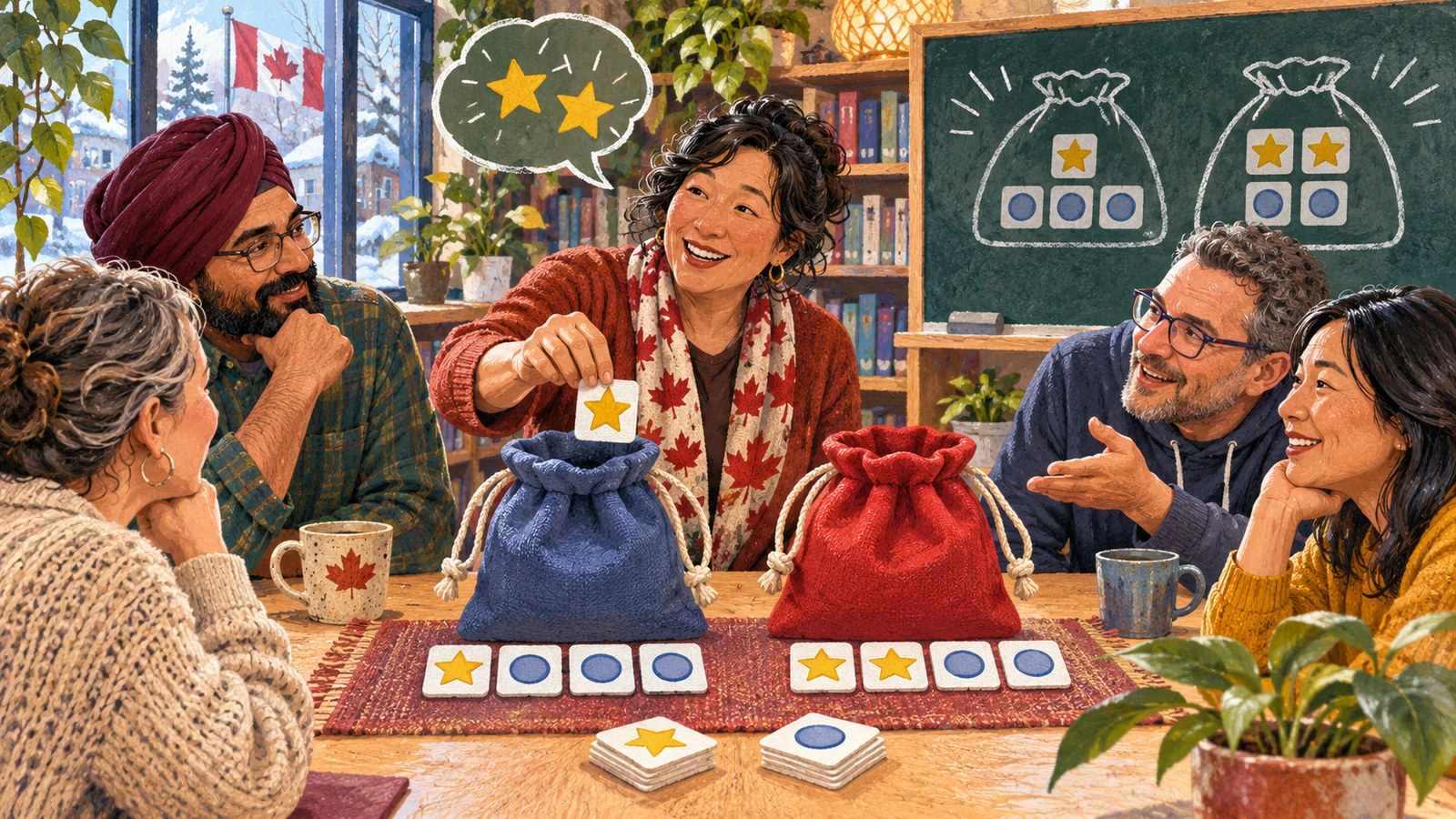
Two bags have the same number of cards. One contains a star and the other contains two stars. Before you draw, ask the group which bag makes a star easier to find and why. Then observe a few turns. The results may give you a good second question.
Compare the starting mixes first
| Bag | Contents | Chance of a star on one draw |
|---|---|---|
| A | 1 star and 3 circles | 1 in 4 |
| B | 2 stars and 2 circles | 2 in 4 |
In the practice setup, Bag A contains one star and three circles. Bag B contains two stars and two circles. With a fair draw, a star has a one-in-four chance in Bag A and a two-in-four chance in Bag B.
After each draw, put the card back and mix so the next turn uses the same starting set. Assign one person to record and another to check that the cards return.
The first four turns might show two stars from Bag A and one from Bag B. That result is compatible with the setup. The short sequence can vary even when the chances you worked out from the contents stay the same.
Keep the tokens as examples. There is no prize for producing more stars. The exercise is about comparing what the arrangement makes possible with what the group happened to see.
Talk about what happened in the short run
- Count the setup
- Show the contents of both bags.
- Explain that each card goes back before the next turn.
- Compare the short runs
- Keep a line for the known mix and another for the observed outcomes.
- Ask why the group can get more stars from Bag A in just four draws.
Questions and answers
- Does Bag B always show more stars in four turns?
- No. It has the higher chance for each fair draw in this setup, but either bag can happen to show more in a short run.
- Can we leave each card out after drawing?
- That changes the contents for the next draw. Use it as a separate comparison.
- Can we draw symbols instead of using rewards?
- Yes. Ordinary paper shapes work for the same reasoning task.