Editorial team ·
After a play round, talk about the choice before the outcome
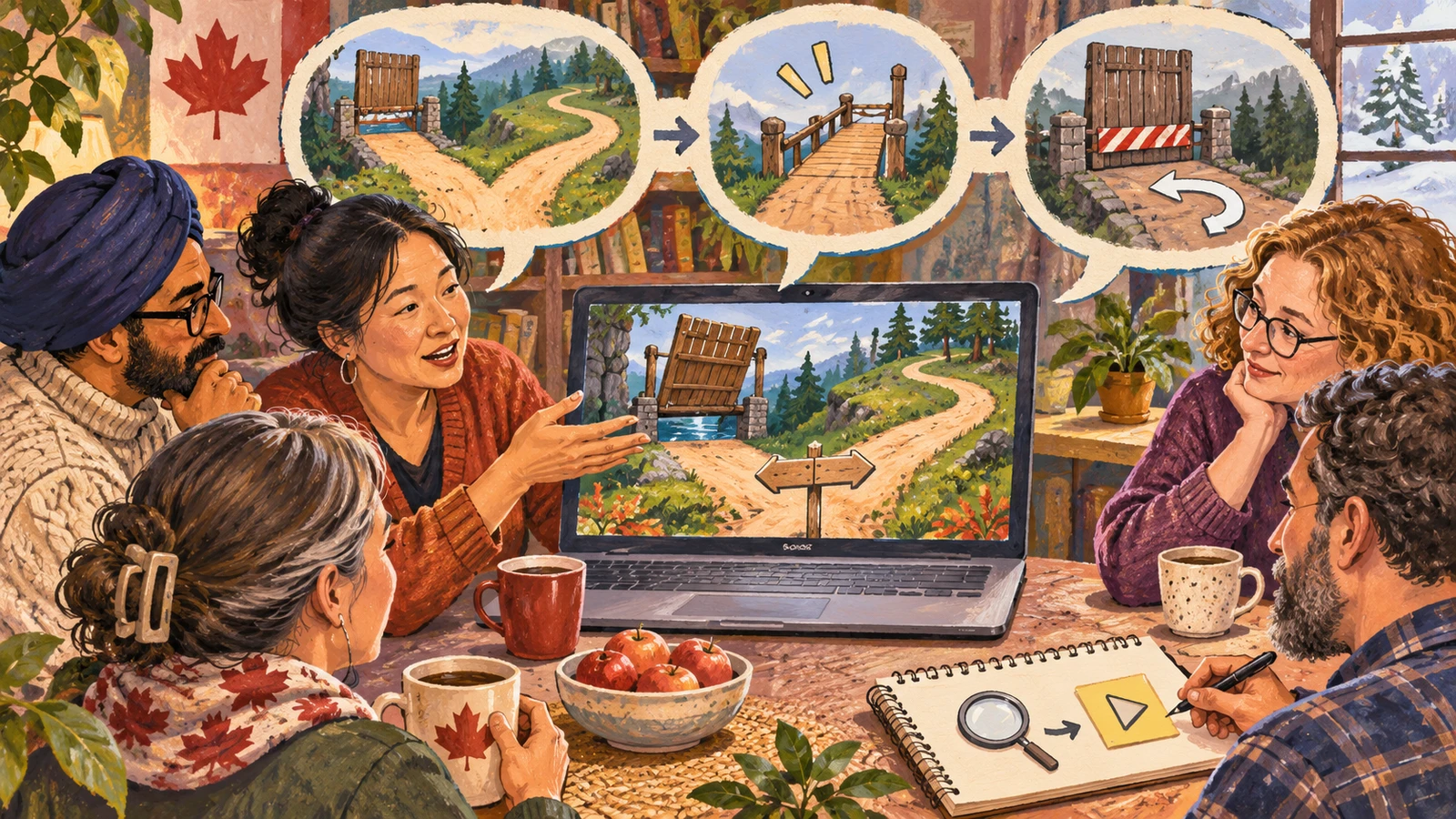
Two players choose the same path and get different results. One calls it the wrong choice. The other says the timer made it impossible. Before agreeing with either, ask what each person saw on the screen before deciding. That often reveals the part of the game the group should discuss.
Describe the information available at the time
In the invented puzzle, the short path has a bridge that might be raised. The longer path stays open in the practice round. Both choices are available. A player who tries the bridge finds it closed and has to turn back.
Give the group a sentence for each stage: “I saw two paths. I chose the bridge. I had to turn back.” That is enough to discuss what happened without describing the player as careful or reckless.
Ask whether the game gives any clue before the choice. The example shows the bridge symbol but no open or closed sign. Players can say they would want another clue without suggesting the result was guaranteed.
For the next round, let learners choose what information to look for. An observer can record whether the screen changes before the choice, while the other person plays.
| Stage | Prompt | Example answer |
|---|---|---|
| Before | What choices could you see? | Bridge path and longer path |
| During | Which one did you choose? | The bridge path |
| After | What changed? | The bridge was closed and I went back |
Questions and answers
- Should I say which path was best?
- Ask what the player was trying to do and what information they had. Compare the choices from there.
- What if a player does not want to speak?
- They can point to a choice or write one line about what happened.
- Does a result show what will always happen?
- It shows the outcome of that round. Use the rules or another trial to check what can change.
Ask how a player would test the choice again
- Begin with the moment before the choice
- Read the two options aloud.
- Name any clue everyone could see.
- Check the consequence
- Say what happened in this round.
- Choose one observation for the next round.