Editorial team ·
End the family game discussion with one small agreement
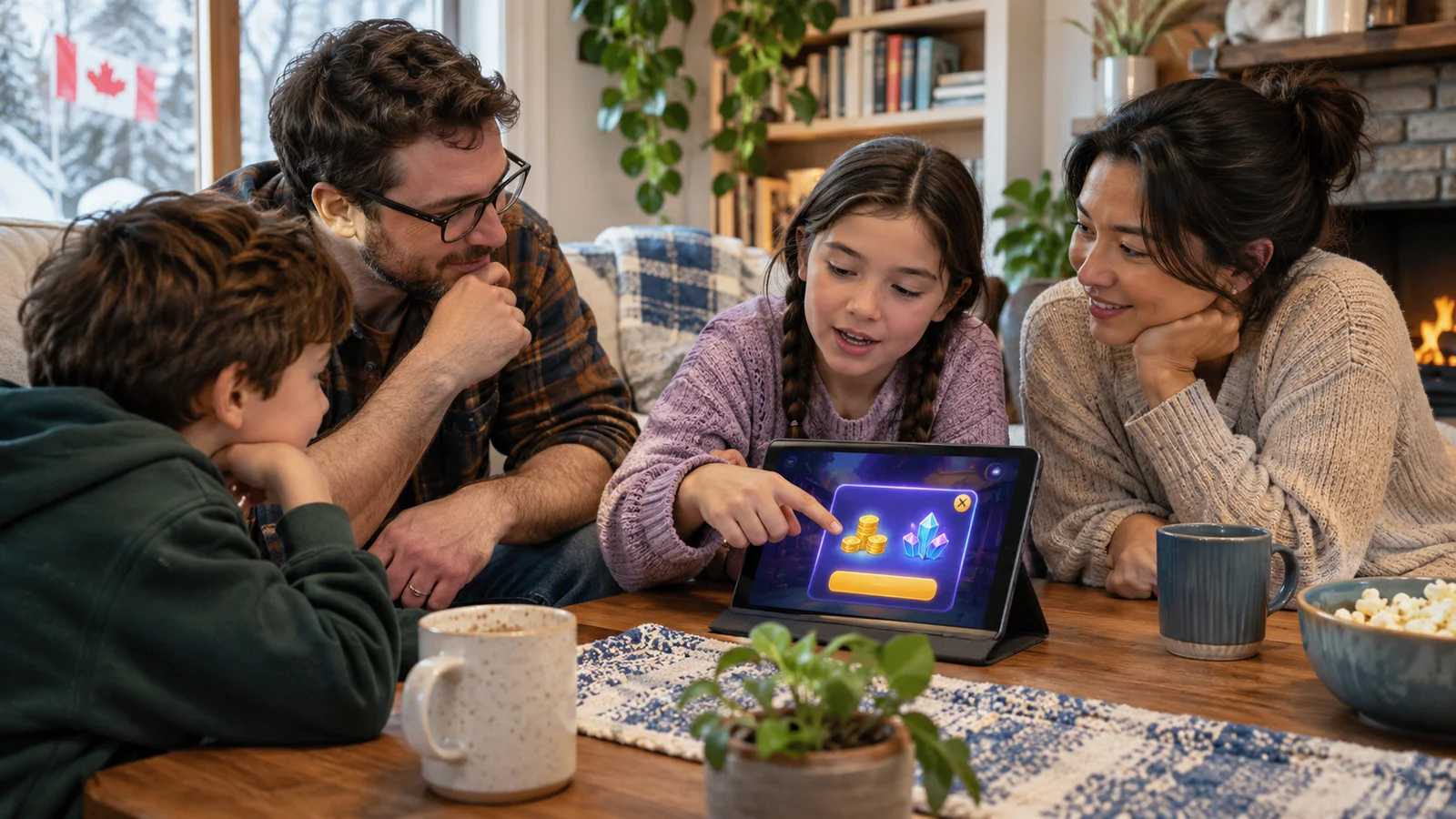
You have talked about the game for ten minutes and everyone has a different idea of what to change. Choose one moment you can all recognize. Then agree what to do when it happens again. A small step is easier to remember than a new rule for every screen.
Pick a trigger the family can see
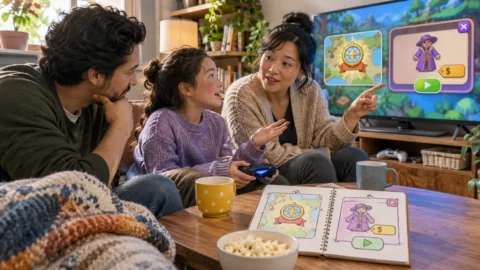
In the invented family conversation, people agree to pause when a price appears. A child can point to it and ask what the extra does. An adult can check the choice later when nobody is in the middle of a round.
Write it as a short action, such as “If there is a price, close the panel and ask before choosing.” Keep it where someone can find it. The point is to make the next moment simple.
Ask what happens if there is no clear way back. In this example, the family agrees to leave the game and return later. Another family may choose a different action that fits the device and activity.
Check the agreement after the next session. Ask whether the signal was easy to notice and whether the agreed action worked. Keep the part people found useful and adjust anything they could not do.
| Part | Example |
|---|---|
| Trigger | A price appears on the screen |
| Action | Pause, close the panel if possible, and ask |
| Fallback | Leave the activity and check it later together |
| Review | Talk after the next play session |
Give the agreement a chance to be tested
- Choose a single moment
- Use a screen detail everyone can recognize.
- Agree on one action and who can help.
- Return after trying it
- Ask what worked in practice.
- Change the wording if the action was hard to follow.
Questions and answers
- Should the agreement mention every game?
- Keep the rule broad enough to recognize the same kind of moment in different games.
- What if we disagree about the rest?
- You can still settle one practical action and leave the larger discussion for another time.
- Can the child suggest the action?
- Yes. Ask what they can see and do when the chosen screen appears.