Editorial team ·
Talk about a paid extra after play, when there is time to read it
The game pauses and offers a new costume just as a child asks for another turn. You have half a second to read the price. Close the panel or leave it for later, then talk when nobody is rushing. Ask what the screen offered and whether it was needed to keep playing.
Agree what happens before a purchase choice
- Give the conversation time
- Leave the purchase screen without choosing.
- Read a neutral example together after play.
- Set a clear family action
- Ask what is optional.
- Agree who checks a price before purchase.
Read the payment prompt in ordinary words
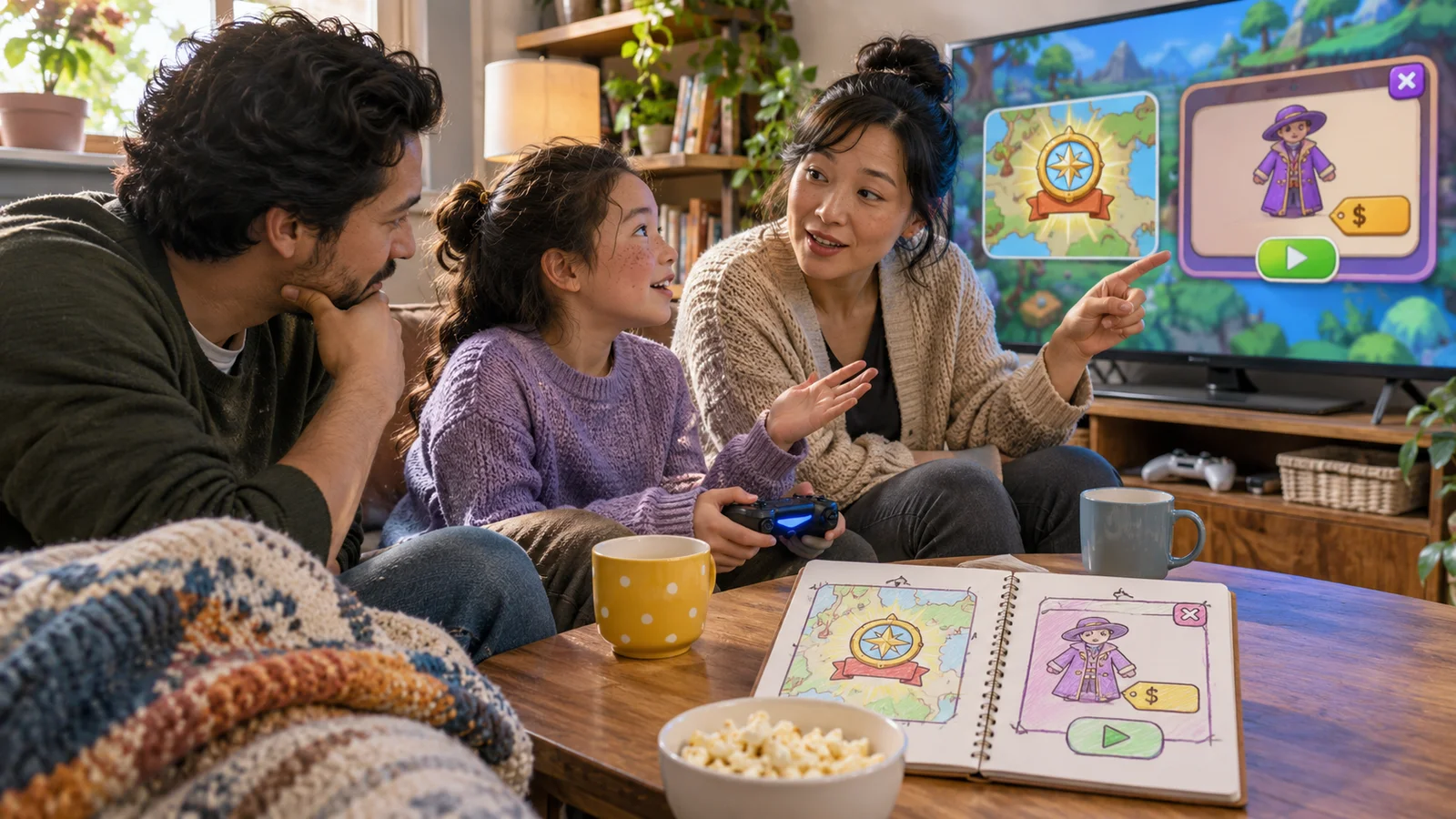
In the fictional game, finishing a level gives a map badge. A separate shop lists a costume with a price in dollars. The Continue button works without buying it. You can use two sketches to show how differently the badge and shop appear.
Check the unit next to the price. It might be a real currency or a number of virtual tokens. If you cannot tell what it costs, leave that question open until an adult can find the applicable price information.
Ask which part of the screen tells someone how to close the offer. A very small Return button is easy to miss. In a practice example, point it out and go back together.
End with a small agreement, such as “When a price appears, we pause and ask before choosing.” An adult can check account and device settings independently if the family needs clearer purchase controls.
| Screen detail | What to ask |
|---|---|
| Map badge | Did it appear because the level ended? |
| Costume price | What does the amount buy? |
| Continue button | Can the game keep going without that item? |
| Return control | How do we get back to the game? |
Questions and answers
- Should I ask the child why they wanted the item?
- You can ask what interested them. Start by understanding what the screen offered.
- Is a token price the same as a dollar amount?
- Check the unit and any applicable conversion or purchase information before treating the numbers as equivalent.
- Do we need to finish the discussion right away?
- One practical agreement can be enough for the moment.