Talk about a game screen without turning it into a lecture
Try a ten-minute conversation for adults who guide children’s play. Ask what appeared, what the player could choose and which message came from outside the game.
Try a ten-minute conversation for adults who guide children’s play. Ask what appeared, what the player could choose and which message came from outside the game.
Use an invented level to distinguish an earned badge, a random decorative item and an optional purchase without making assumptions about the player.
Use an adult-facing media review to sort a match notice, a sponsor credit and a sportsbook promotion. A classroom example can use a fictional non-betting sponsor.
Run a short practice round before a lesson. Check the instructions, whether everyone can take part and which screens ask for a separate choice.
Read a fictional mid-game panel for its timing, sender and available buttons. Distinguish a rule reminder from a separate invitation.
Read an invented odds display beside a score and a match statistic. Give adult participants enough context to identify the numbers without using a real offer.
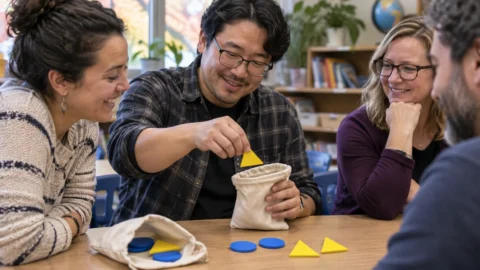
Compare two small groups drawing coloured shapes from identical sets. Replace each shape and discuss why short results can differ.
Use three questions to debrief a fictional game. Separate the options players saw, what they chose and what happened afterward.
Give parents and educators an adult-facing comparison of a free game reward, a paid random item, and a wager on a sports event.
Use an invented game shop to check what a price buys, whether the item is optional and how a player can return to the game.